
Evidence-led. Curious by nature. Real-life focused.
01
A life shaped by questions
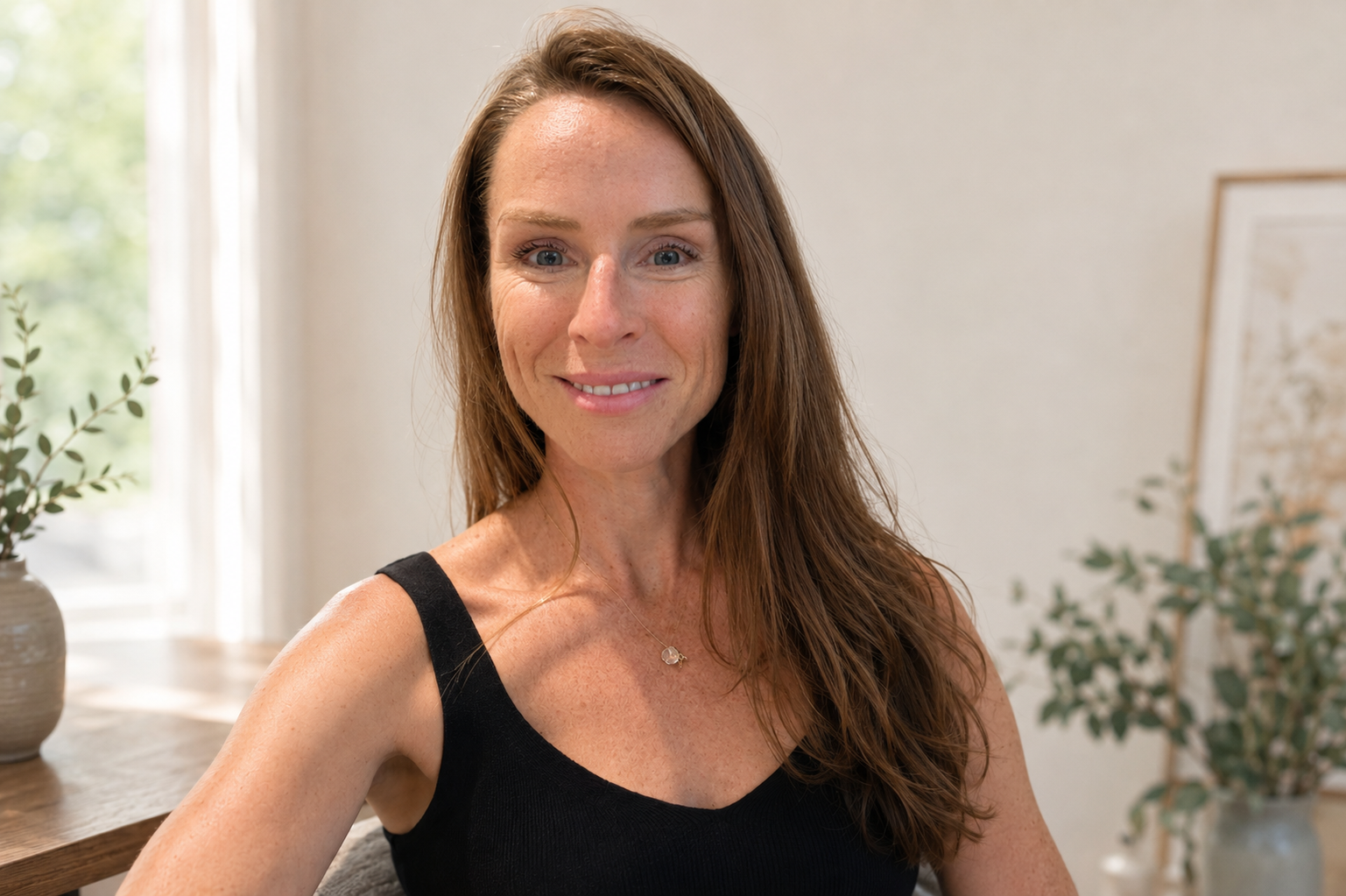
ENI Nutrition was founded by Aoife. "My relationship with nutrition started long before I studied it. I worked in technology, where I spent much of my career thinking analytically, solving problems and working with data. Alongside this, exercise became an increasingly important part of my life — not simply for performance, but because of the profound impact it had on my mental wellbeing. I eventually became a qualified yoga instructor and endurance sport became a significant part of my life, including competing in Ironman events.
Food, however, has always been a more complicated story.
I was a fussy eater as a child and teenager, often gravitating towards vegetarian food, and I learned to cook from a young age so I could make food I actually enjoyed. Then, at 24, I had an appendectomy which was followed by a dramatic change in my digestive health and the onset of chronic IBS.
I remember going from being someone who loved food to someone who was afraid of it.
02
Looking beyond restriction
I tried exclusion diet after exclusion diet, constantly trying to work out what I could and couldn't eat. The more restrictive my diet became, the more miserable I felt, with less variety, less energy and, ultimately, less enjoyment of food.
After feeling dismissed by a gastroenterologist, I spent the next decade trying to understand what was actually going on.
Four of those years were spent in Sydney, where I was introduced to a much more progressive way of thinking about the relationship between nutrition, the gut and wider health. I began to understand that food was not simply about calories or individual nutrients. It was information, a series of signals interacting with our physiology in complex ways.
That experience changed the way I thought about nutrition. It also made me question how much nutrition advice is presented as fact when the reality is often much more nuanced.
Food is not simply about calories or individual nutrients. It is information, a series of signals interacting with our physiology in complex ways.
03
From products to people
I went on to start a business, initially developing healthy drinks and snacks focused on gut health, which later evolved into a sports drink. I learned an enormous amount about nutrition, health and the health industry through that experience, but it also clarified something important:
So I went back to university to study Nutrition and Lifestyle Medicine.
I deliberately chose a degree that was grounded in science and evidence. Coming from a technology background, I wanted to understand not just what we are told to do, but why, the mechanisms behind nutrition and health, what the research actually shows, where the evidence is strong, and where it isn't.
I wanted to work with people, not products.
04
A scientific foundation
I graduated with First Class Honours, and my dissertation, awarded a distinction, explored the impact of GLP-1 receptor agonists and dual GLP-1/GIP receptor agonists on body composition.
Today, that same curiosity underpins Evidenced Not Influenced Nutrition.
There is more nutrition information available to us than ever before — but more information doesn't necessarily mean better decisions. Social media, headlines, commercial interests and constantly changing dietary trends can make it incredibly difficult to know what to believe.
My role is not to give you another set of rules to follow.
05
From questions to evidence
My personal experiences with nutrition ultimately led me back into education, completing a BSc in Nutrition and Lifestyle Medicine with First-Class Honours.
For my dissertation, I received a distinction for a systematic review exploring how GLP-1 and dual GLP-1/GIP receptor agonists affect body composition — including lean mass and fat mass — in adults with overweight or obesity without diabetes, with and without structured lifestyle interventions.
That research strengthened my interest in looking beyond weight alone and considering the wider picture: what we eat, what happens to our body composition, how we support physical health and the behaviours we build for the future.
It is this evidence-led but practical approach that underpins my work at ENI Nutrition.
Looking beyond weight alone — considering nutrition, body composition, physical health and the behaviours we build for the future.
The ENI approach
Making evidence useful in real life
My role is to make sense of the evidence, put it into context and translate it into practical advice that works for you.
I believe in educating and empowering rather than preaching. In asking better questions rather than accepting the latest claim at face value. And in recognising that nutrition has to work within the context of an actual life.
I'm a mother, so I understand the reality of being time-poor, juggling work and family, and trying to feed yourself and your family well when there simply aren't enough hours in the day.
Good nutrition isn't about achieving perfection. It's about understanding what matters, and turning that knowledge into practical changes that support your health."
Evidenced, not influenced.
Practical, personalised nutrition support that helps you make confident decisions for your health.